Quick Answer
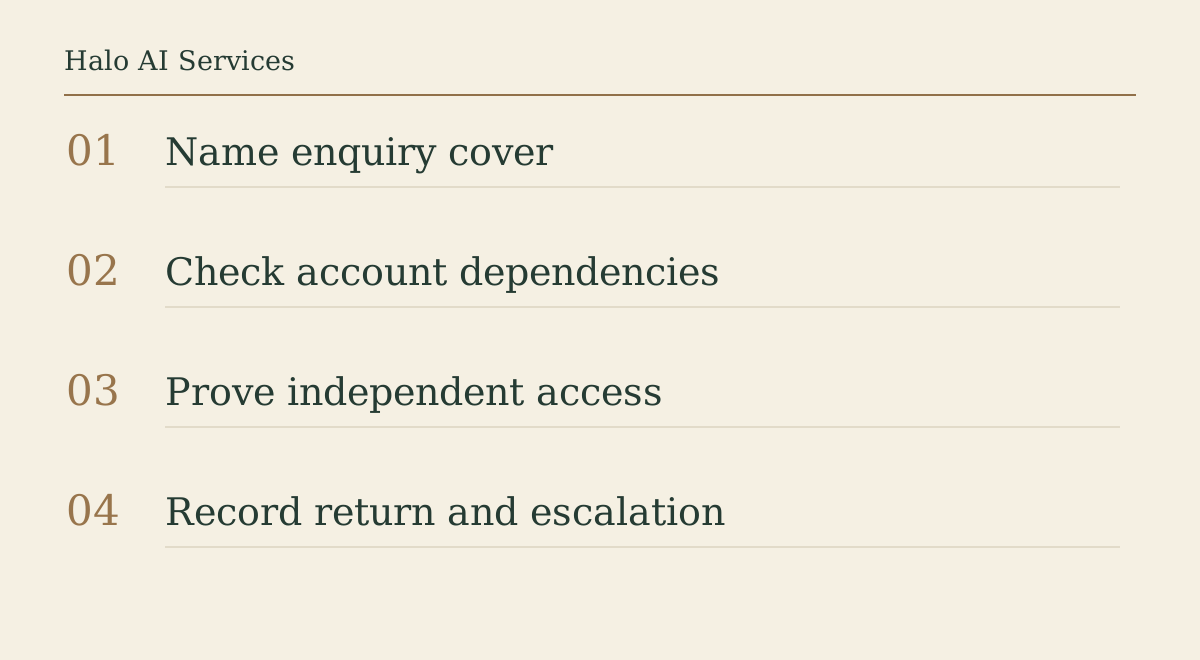
An enquiry workflow needs both a person who can act on the request and someone who can maintain the automation. Before leave, name the cover owner, prove they can find a safe test enquiry, and check who controls the connected accounts. A forwarded notification alone does not prove that cover works.
Separate the customer task from the technical ownership
The person returning a customer’s call may never edit the automation. The person who built the workflow may never see the shared enquiry queue. Both roles matter when the usual owner is unavailable, but granting one role does not automatically grant the other.
For a small Island business, write two names or roles beside the workflow: enquiry cover and technical support. Define the action each may take. The cover person might acknowledge and triage requests, while only the maintainer can change routing. Avoid giving broad administrative access just because someone needs to return calls.
Follow one enquiry to the place where work happens
List the website form, the stored request, the notification destination and the working queue. Identify which is the source of truth for status. A shared mailbox, CRM queue or task board can work if the team knows where an enquiry becomes owned and where its next action is recorded.
Check what happens when the normal owner is marked away. Does a task still land in their private queue? Does a second person receive an alert but lack access to the request? Does an automatic acknowledgement promise a response no one has agreed to provide? These are concrete questions for the cover plan.
Inspect connected accounts as a separate dependency
A workflow can appear shared while a necessary app connection still belongs to a personal account. Zapier’s current documentation distinguishes workflow access from app-connection ownership. It also notes that transferring a connection’s owner leaves the underlying connected account unchanged.
That is a Zapier-specific example, not a claim about every automation platform. Ask your maintainer to inventory the dependencies for the system you actually use. Record the connection owner, underlying account, permitted users and recovery route without copying passwords, tokens or unnecessary customer data into the handover.
Define what the cover person can decide
Write the permitted responses in business terms. Can the cover person acknowledge receipt, request missing details, arrange a discussion or promise a booking? Which requests must wait for the owner? A clear boundary is more useful than a generic instruction to keep an eye on things.
An AI summary may help the cover person understand an enquiry, but it should not invent availability, prices or commitments. Keep uncertain or sensitive requests in an owner-reviewed queue. If nobody can cover a particular service, make the customer-facing expectation accurate through the normal authorised content process.
Run a handover test with fictional details
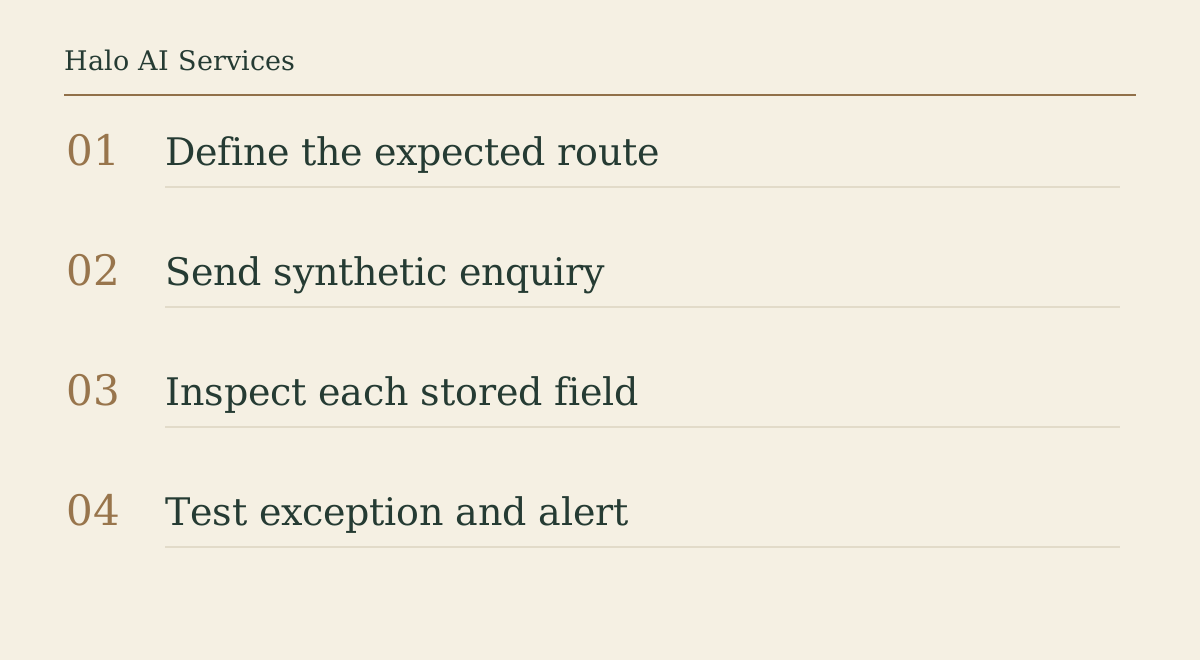
Agree a test with the business owner and cover person. Use an isolated test route where possible, or a clearly labelled synthetic submission that cannot trigger a booking, payment or real customer reply. Give it a unique reference and record the time and intended destination.
The cover person should sign in through their own permitted access, locate the exact reference, identify the required next action and record a harmless test status. The maintainer should demonstrate where a failure would become visible. Do not accept “the email was sent” as the whole result if the actual work happens in a CRM.
Test the missing-person case without breaking production
A test that depends on the usual owner finding the record or approving every click has not demonstrated independent cover. Ask the cover person to work from the handover note while the owner observes. Record which access, knowledge or permission was missing.
Do not revoke a live connection to simulate a holiday. A maintainer can use a test environment or a documented review of failure handling. Zapier warns that loss of access to a required shared connection can pause a workflow; a continuity check should not create the outage it is meant to prevent.
Leave a compact return plan
The handover note needs the queue link, cover role, permitted actions, escalation route, test reference and date, and the owner’s return review. Keep an unresolved-request list in the working system. On return, reconcile open items before removing temporary cover access through the normal access process.
For one example, the acceptance record might say: synthetic enquiry found by cover user; acknowledgement decision correctly identified; no real reply sent; technical escalation location confirmed. Those are proposed checks, not a Halo customer case study. Record the actual observed result and any remaining limitation.
Scope the repair around the failed handoff
If the cover person cannot find a request, first repair the queue or access route that failed. If only the builder knows how to reconnect a service, document and assign that responsibility. A complete replacement is not automatically the right response to a narrow ownership gap.
Bring Halo a redacted route map and the step that could not be completed independently. A bounded audit can establish the current workflow, the intended cover and a testable change. It does not promise additional leads or a revenue result merely because the handover works.
FAQ
Is forwarding enquiry emails enough for holiday cover?
Only if the cover person can also find the request, act within agreed permissions and record the next step. Verify the complete working route.
Does sharing an automation transfer every connection?
Do not assume so. Platforms distinguish workflow access, connection ownership and the underlying app account. Check your actual system.
Should I share the owner’s password with the cover person?
Use the platform’s authorised access arrangements and individual accounts where supported. Do not put passwords or tokens in a handover note.
What should the handover test prove?
The cover person can independently locate a synthetic request, identify the permitted next action and find the escalation route without sending a real customer message.
Next step
Bring Halo one enquiry route, its cover role and the handoff that currently depends on the owner. Use a redacted example to scope a small, testable reliability audit.
Sources
- Zapier: manage app connections: Primary documentation distinguishes connection ownership from the connected account.
- Zapier: shared app connections: Primary documentation covers permissions and the effect of losing access to a required connection. The handover checklist is our editorial application.