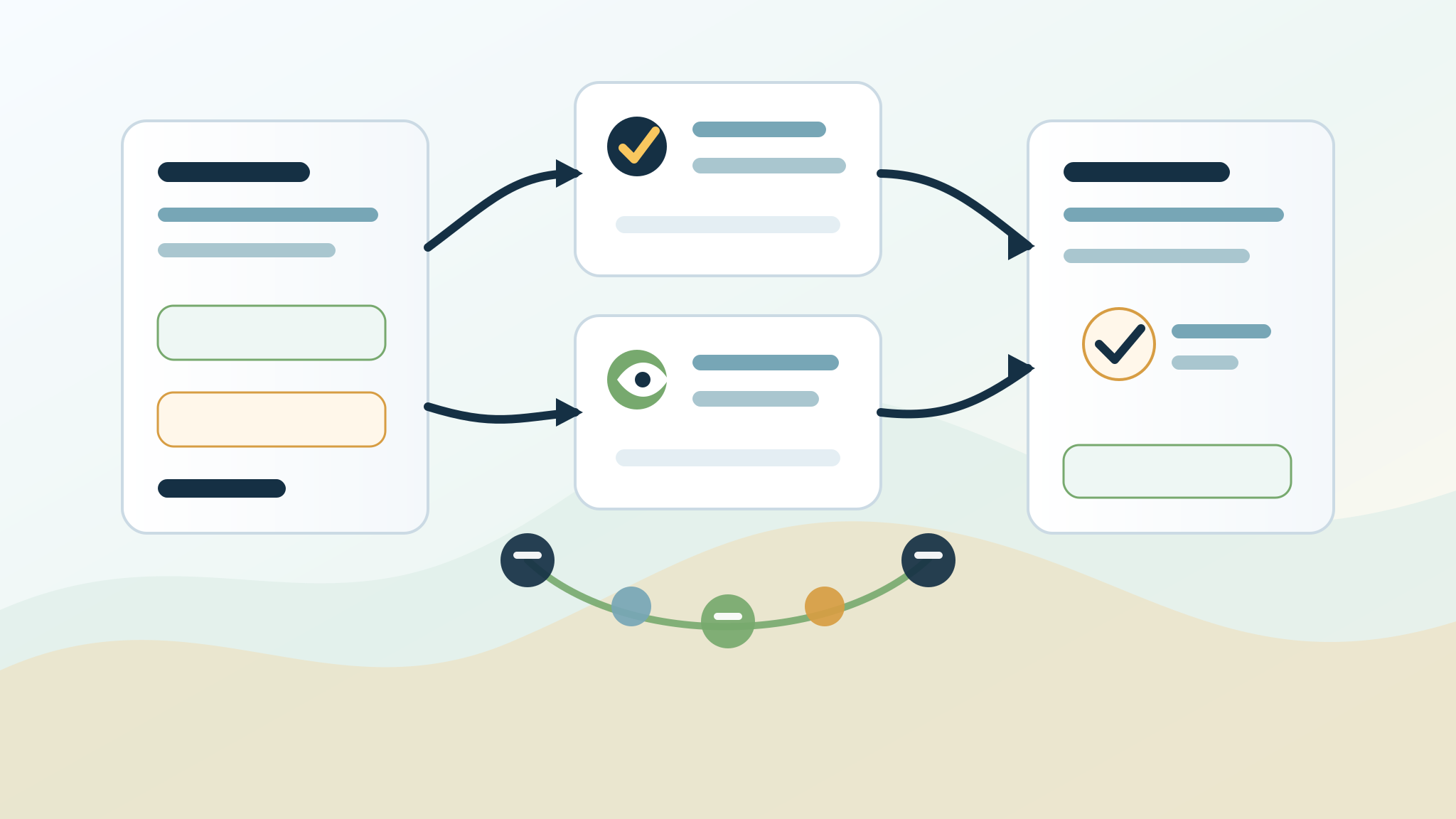
A service-page proof ledger is a controlled list of claims and the evidence behind them. It helps a buyer see what the business actually delivered, when the evidence was checked and which statements are examples rather than guaranteed outcomes.
It also helps search and AI systems. Clear entity facts, dated sources and consistent visible copy are easier to interpret than a page full of unqualified superlatives.
Quick Answer
Create one row for every important service claim. Record the exact visible wording, claim type, source, evidence owner, checked date, expiry or review date and publication status. Keep customer permission and privacy visible. Remove or qualify any claim that cannot survive a source check.
The ledger does not need to be public in full. The service page should show the useful evidence; the internal record should preserve how that evidence was approved.
Start With The Claims Closest To A Buying Decision
Do not begin by cataloguing every sentence on the website. Start with claims that affect trust or price:
- Services provided.
- Geography covered.
- Delivery times.
- Starting prices.
- Qualifications or accreditations.
- Customer counts or years trading.
- Performance results.
- Case-study outcomes.
- Availability and response expectations.
- Guarantees, refunds or support terms.
These are the statements most likely to be repeated in search snippets, AI answers, sales calls and proposals. If they drift, the business creates conflicting versions of itself.
Give Every Claim A Type
A type helps the reviewer apply the right standard.
Useful categories include:
- Entity fact: registered name, location or contact route.
- Offer fact: service, scope, starting price or availability.
- Process proof: the steps, checks or receipt used to deliver work.
- Outcome proof: a measured result tied to a defined period and source.
- Customer evidence: review, testimonial or case study with permission.
- Editorial judgement: an opinion or recommendation that should not be presented as measured fact.
A process receipt can be strong proof without pretending to be a customer outcome. For example, "build, schema validation and live mobile checks completed" is different from "traffic increased".
Record The Source And Checked Date
The source should be specific enough for another person to verify: project receipt, invoice, public register, analytics report, signed approval, live URL or approved customer quote.
Add the person responsible and the date checked. Some facts are stable; others need regular review. A price, delivery time or platform feature can change quickly, while a completed project receipt remains historical evidence.
Set a review trigger:
- Monthly for prices or availability.
- At every release for technical capability.
- Before reuse for customer quotes.
- Immediately when a service or policy changes.
- On a fixed quarterly check for core entity facts.
Separate Evidence From Interpretation
A screenshot of an analytics chart is evidence that numbers appeared in a tool. It is not automatically proof that one website change caused the result. Preserve the date range, comparison, filters and known limitations.
Write the public claim no wider than the evidence. "Form completion errors fell after the new validation shipped" may be supportable. "Our AI doubles conversions" requires far stronger, repeatable evidence and should not be inferred from one project.
This discipline improves answer-engine visibility because the page gives systems clear statements they can cite without amplifying an unsupported promise.
Keep Customer Permission And Privacy In The Ledger
Record whether the business can publish a customer's name, logo, quote, screenshot, location and result. Approval for a private case-study review is not automatically approval for public publication or reuse in advertising.
Redact customer data and private account details from public proof. Keep the minimum evidence needed to substantiate the claim and store the full source in the appropriate controlled system.
Align Visible Copy And Schema
Structured data should describe the same facts a visitor can read. Do not put ratings, prices, awards, locations or outcomes into schema when the visible page does not support them.
For a service page, align:
- Title and opening answer.
- Service scope and area served.
- Proof block.
- FAQ answers.
- Organisation or Service schema.
- Internal link to the next commercial route.
The AEO guide explains answer-ready page structure, while the AI optimisation guide covers recommendation consistency.
Use A Small Public Proof Pattern
A useful public proof block can answer four questions:
- What changed?
- What checks passed?
- Where can the result be inspected?
- What does the evidence not prove?
Halo's own proof ledger uses delivery receipts to make the process inspectable without inventing customer outcomes. The same pattern can support a local service, consultancy or software product.
Audit The Ledger Before Publishing
Select five high-impact claims and try to disprove them. Open every source, check dates, compare the visible page with schema and confirm the owner still stands behind the wording.
Track three results: verified, needs qualification and remove. Do not leave "needs evidence" claims live while waiting for a future case study.
What To Send Halo
Send one public service page, the five claims most important to a buyer and the evidence currently available. Halo can map the proof block, answer structure, schema alignment and review cadence as one visibility slice.
Use the free AI audit to identify which unsupported or hidden proof point is weakening the route to enquiry.
FAQ
What is a service-page proof ledger?
It is a record of important website claims, their sources, owners, checked dates, review dates and publication status.
Does every proof item need to be public?
No. Publish enough evidence for a buyer to understand the claim, while keeping private records, customer data and internal sources in a controlled system.
Can process evidence replace case studies?
It proves a different thing. Process receipts can show how work was checked and delivered; case studies can show an approved customer context and outcome.
Should proof be added to schema markup?
Only when the same fact is visible and supportable on the page. Schema should not carry ratings, outcomes or offer details that visitors cannot verify.
How often should a proof ledger be reviewed?
Review fast-changing claims such as price and availability frequently, re-check customer permissions before reuse and audit core service claims at least quarterly or whenever the offer changes.