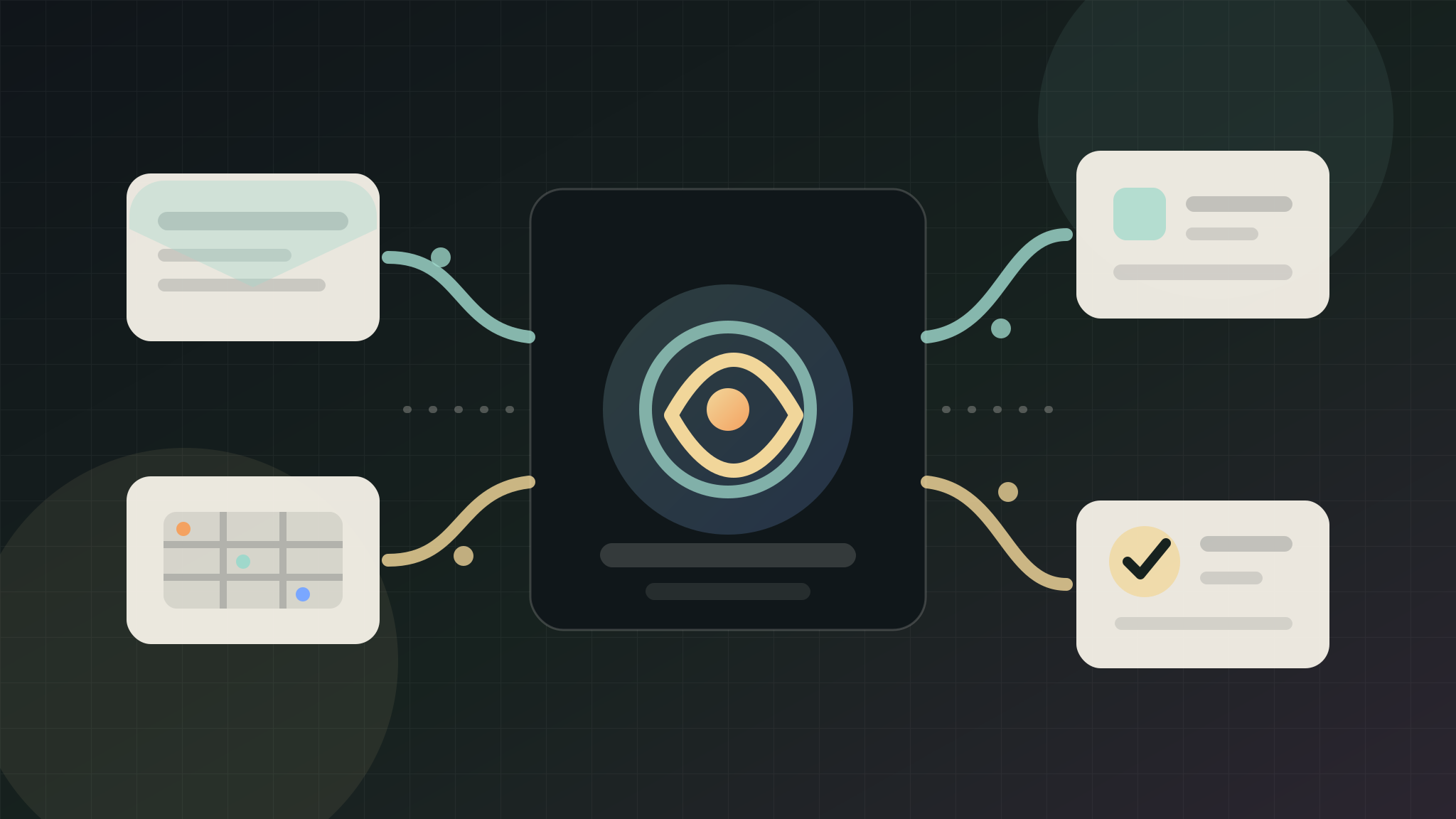
AI meeting notes are useful when they reduce the gap between a conversation and an owned next action. They are risky when recording becomes the default, the summary invents certainty or a draft commitment reaches a customer without review.
For a UK SME, the best first workflow has a declared purpose, participant awareness, controlled retention, a small output schema and a named person who approves anything entering a CRM or leaving the business.
Quick Answer
Define the output before choosing a meeting tool. Ask for decisions, actions, owners, due dates, unresolved questions and source references. Keep customer promises, prices, legal points and deadlines behind human approval. If a transcript is not necessary, use structured human notes instead.
The goal is not a beautiful summary. It is a reliable handoff that shows what happened, what remains uncertain and who owns the next move.
Choose The Meeting Type First
A sales discovery call, project review, hiring interview and internal stand-up should not share one generic template. Each meeting has different risk and a different useful output.
For a sales call, the output may be needs, constraints, stakeholders, timing, missing information and an approved follow-up draft. For a project review, it may be decisions, risks, owners and due dates. For an internal stand-up, a transcript may be unnecessary if three structured fields are enough.
Start with the lowest-data method that can produce the useful handoff.
Make Participant Awareness Visible
Decide how participants will be told about recording or transcription, what the information will be used for and how long it will be kept. Confirm the organisation's responsibilities before relying on a provider setting or a meeting-platform banner.
The ICO UK GDPR guidance is a useful starting point. The right process depends on the meeting, the information involved and the organisation's legal basis, so obtain appropriate advice where needed.
Do not quietly expand a workflow from internal action notes into performance monitoring, customer profiling or model training. A new purpose needs a new decision.
Use A Structured Output
A short schema makes omissions visible and reduces fluent but unusable prose.
A practical meeting-note record can contain:
- Meeting date and purpose.
- Participants and roles.
- Confirmed decisions.
- Actions with one owner and one due date.
- Customer commitments requiring approval.
- Unresolved questions.
- Evidence reference, such as a timestamp or source note.
- CRM fields proposed for update.
- Follow-up draft status: not drafted, ready for review or approved.
Use "not stated" where the source does not support an answer. Never fill a blank deadline or budget because the surrounding conversation sounds suggestive.
Separate Facts, Inferences And Drafts
A decision stated in the meeting is different from an AI inference. A proposed next step is different from an approved customer commitment. Label those categories explicitly.
For example:
- Confirmed fact: buyer needs a quote for two service locations.
- Inference for review: urgency may be high because the current supplier ends next month.
- Draft action: ask the buyer to confirm the required start date.
- Approved action: owner has reviewed and will send the question today.
This distinction is useful in CRM notes and protects the team from treating generated language as evidence.
Keep An Approval Boundary
A human should check names, figures, deadlines, promises and sensitive details before a CRM update or email is sent. The workflow can create an internal task or draft, but live actions need an owner.
Define exceptions in advance:
- Missing or conflicting owner.
- Price, scope or deadline mentioned.
- Complaint, legal issue or safeguarding concern.
- Sensitive personal information.
- Transcript quality too low to support a summary.
- Customer request that does not fit the normal process.
Route each exception to a named role. Do not let it disappear into a general "review later" queue.
Design The CRM Handoff
Only write fields the meeting can support. Keep the source meeting and checked date available, and avoid copying a full transcript into every customer record.
A useful CRM handoff might propose:
- Summary limited to the commercial need.
- Service or product interest.
- Named next action.
- Owner.
- Due date.
- Missing qualification fields.
- Link to the controlled source record.
Read the AI CRM automation guide before allowing updates, and use the follow-up automation guide for the reviewed customer response.
Test Accuracy And Usefulness Separately
A summary can be accurate but still useless, or concise but wrong. Test both.
Choose a small set of meetings with different speakers, accents, connection quality and decision types. Compare names, actions, owners, dates and commitments against a human-reviewed answer. Record omissions and unsupported additions.
Then ask whether the output saved time. Useful proof signals include faster action assignment, fewer missed follow-ups and fewer corrections before CRM entry. Word count is not a success metric.
What To Send Halo
Send the current meeting type, a redacted example, the desired output fields, the approval owner and the action that should happen after review. Halo can map one note-to-action route without connecting accounts or processing live customer data in the first audit.
Use the free AI audit to turn one meeting handoff into a scoped workflow recommendation.
FAQ
Can AI automatically send meeting follow-ups?
It can draft a follow-up, but customer commitments, prices, deadlines and sensitive details should pass a defined human approval step before sending.
What should an AI meeting summary contain?
Use decisions, actions, owner, due date, unresolved questions and source references. Mark information that was not stated rather than guessing it.
Is a transcript always necessary?
No. Structured human notes may be enough for lower-risk internal meetings and can reduce unnecessary data collection and retention.
Should AI meeting notes go straight into a CRM?
Not by default. Propose the relevant fields, review them and write only the information the customer record genuinely needs.
How do you measure a meeting-notes workflow?
Measure fewer missed actions, faster assignment, less rewriting and a low correction rate for names, dates, commitments and CRM fields.