Answer first: A small business cannot buy a ChatGPT citation or a place in a Google AI Overview. It can remove the blocks that make a citation impossible, and publish one public page that answers a real question in the first paragraph. OpenAI and Google describe different controls. Mixing them up is how firms block the crawler they meant to allow.
Quick answer
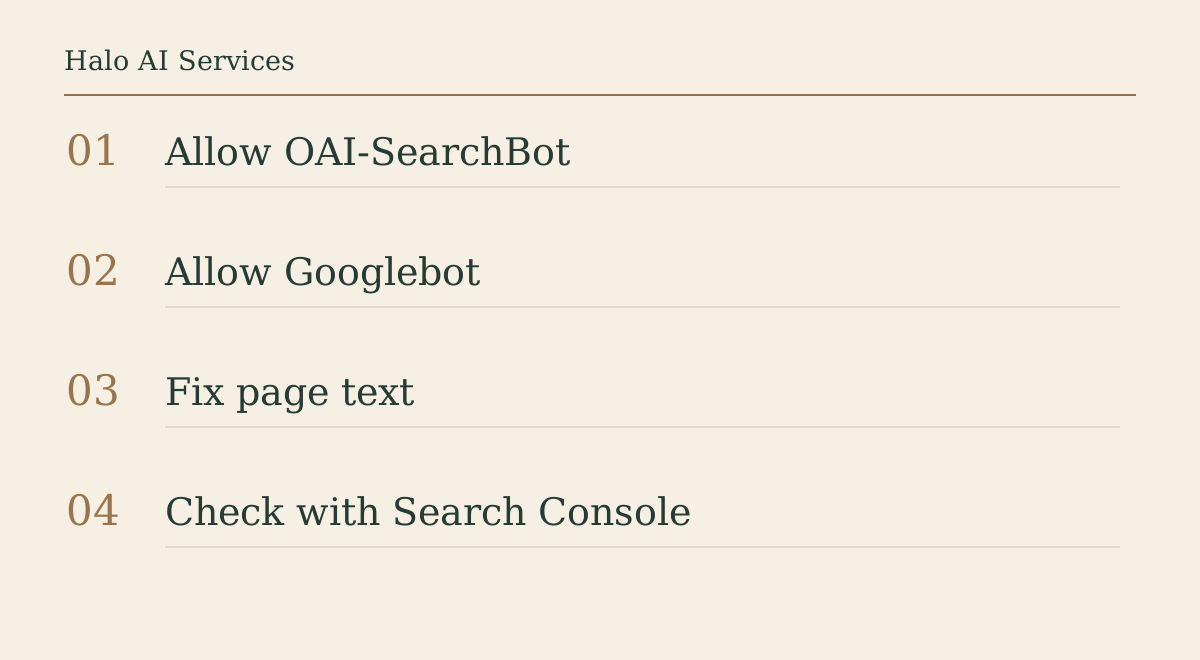
For ChatGPT's search features, OpenAI's crawler documentation says OAI-SearchBot is the robots.txt control used to surface sites in those results. Opting that bot out means the site is not shown in ChatGPT search answers. It can still appear as a navigational link. GPTBot is a separate control for content that may be used to train OpenAI's foundation models. The two settings are independent.
For Google's AI Overviews and AI Mode, Google's AI features guide says a page must be indexed and eligible to show in Google Search with a snippet. There are no extra technical requirements, and meeting them still does not mean Google will crawl, index, or show the page. Googlebot is the crawl control for Search, including those AI features. Google-Extended does not control inclusion in Google Search.
Halo AI Services will not promise a citation, a share of "AI answers", or a ranking. This guide is the eligibility check. Page structure sits in the existing answer-engine optimisation checklist and the service-page AEO guide.
What "cited" means, and what a screenshot does not prove
People use "cited" for three different things:
- A linked source under an answer, so a reader can open your page.
- A title and URL with no extracted answer. OpenAI says an opted-out site can still appear this way in some ChatGPT surfaces.
- A sentence in a model reply with no link. You cannot audit that from one chat window.
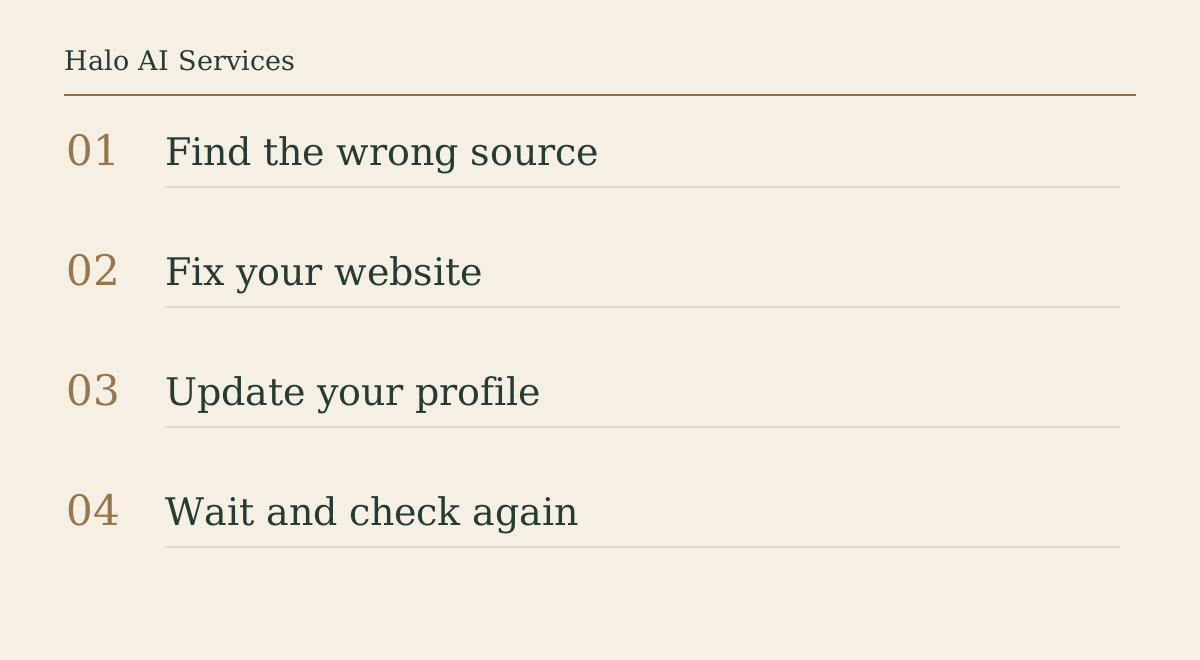
One conversation is not a measurement. The same question can produce a different set of links later, or none. Treat a screenshot as a clue, then check the controls below. Halo's answer-engine visibility audit is the page-and-evidence review. This article is the crawler and product-control review.
ChatGPT: four OpenAI agents, four jobs
OpenAI's overview of crawlers separates the user-agent tokens. A rule for one does not switch the others off.
- OAI-SearchBot is for search. OpenAI says it is used to surface websites in ChatGPT search features, and recommends allowing it in robots.txt if you want that. Sites opted out of OAI-SearchBot are not shown in ChatGPT search answers, though they can still appear as navigational links. OpenAI also says it can take about 24 hours after a robots.txt change for search systems to adjust. Published IP ranges are at openai.com/searchbot.json. Copying an old IP list out of a blog post is a good way to allow the wrong addresses.
- GPTBot crawls content that may be used to train generative foundation models. Disallowing GPTBot is how you say that content should not be used for that training. It is not the switch for ChatGPT search. Allowing both bots can mean OpenAI uses one crawl for both purposes, which is their stated way of avoiding a second visit.
- ChatGPT-User fetches pages when a person asks ChatGPT or a custom GPT to look at a URL, including some actions. OpenAI says this agent is not an automatic crawl, that robots.txt may not apply because a user initiated the fetch, and that it is not used to decide Search inclusion. Use OAI-SearchBot to manage search opt-out.
- OAI-AdsBot visits pages submitted as ads on ChatGPT. It is not the crawler that decides whether an ordinary service page is cited. Ignore it unless you are actually placing those ads. OpenAI's advertiser notes are a separate product.
OpenAI's publisher FAQ adds three practical points. There is no form that "submits" a small-business site to ChatGPT search. Referral links from ChatGPT can carry utm_source=chatgpt.com, which is how an analytics tool can show that traffic if it arrives. If a page is disallowed for OAI-SearchBot but the URL is known from somewhere else, OpenAI says ChatGPT Atlas may still show the link and title. The same FAQ says a noindex meta tag is how you opt out of that, and the crawler has to be allowed to read the tag.
A security tool can still return a block page after robots.txt says allow. OpenAI tells advertisers to check firewall, CDN, and bot-protection rules, not only the text file. The same failure mode hits a plumber's site on a locked-down host: the file allows OAI-SearchBot, the edge challenges it, and nothing useful is fetched.
A robots.txt pattern to check, not to paste blindly
This is the shape OpenAI's own docs describe for "allow search, refuse training". Read your live file before you add it. A later User-agent: * block that disallows everything can still catch any bot that does not have its own group.
``` User-agent: OAI-SearchBot Allow: /
User-agent: GPTBot Disallow: / ```
If the business does not want to be in ChatGPT search answers either, disallow OAI-SearchBot as well. That is a real choice for some firms. It is not an SEO trick. Write down which choice you made and the date, because the file will get edited again by a plugin or a host.
Google AI Overviews and AI Mode
Google's AI features and your website guide, which showed a last-updated date of 10 December 2025 when this article was written, is the page to re-read before you act. The rules that matter for a small firm:
- SEO fundamentals still apply. Google says there are no additional requirements and no special optimisation that you must do for AI Overviews or AI Mode.
- To be eligible as a supporting link, the page must be indexed and eligible to be shown in Google Search with a snippet, including the usual technical requirements.
- Compliance does not guarantee crawling, indexing, or serving. Google says that directly.
- Useful checks they list include: crawling allowed in robots.txt and at the host or CDN; important content findable by internal links; important content in text rather than locked in an image; structured data that matches the visible text; Merchant Center and Business Profile details that are current where you use them.
- Google says you do not need a new machine-readable AI file, an "AI text file", or special schema to appear in these features. There is no special schema.org type required for AI Overviews. FAQ markup can still help a human reader, and it should match the words on the page. It is not a citation button.
- AI Overviews and AI Mode are counted inside the Search Console Performance report for the Web search type. Google does not, in that guide, offer a separate "you are number three in AI answers" metric.
- Google says clicks from search result pages that include AI Overviews have looked higher quality on their side, in the sense that people are more likely to spend longer on the site. That is Google's observation about its own product. It is not a Halo result, and it is not a percentage you can put on a proposal.
Googlebot is the robots.txt token for Google Search, including AI features in Search. To limit what Search can show, Google points owners to nosnippet, data-nosnippet, max-snippet, or noindex.
Google-Extended is a different token. Google's common crawlers documentation says it lets a publisher manage whether crawled content may be used to train future Gemini models and for grounding in Gemini apps and Vertex AI. It does not affect inclusion in Google Search, and Google says it is not a ranking signal. Blocking Google-Extended does not switch off AI Overviews. Blocking Googlebot can take you out of Search entirely, which also removes eligibility for those AI features.
Recheck the two Google pages when you do the work. Product names and controls move. This article records what those pages said for a reader on 4 October 2026.
What to fix on the page after the crawlers are allowed
Crawler access only makes the page eligible to be fetched. The page still has to answer something a buyer asked.
Keep the public answer in HTML text, near the top, in the same words you would say on the phone. Name the service, the area you actually cover, and the next step (form, phone, or email). Do not hide the only clear sentence inside a slide, a PDF, or a picture of a van.
Then stop expanding this article into a second AEO manual. Use these instead:
- What to fix before you chase mentions
- Service pages that are easier to understand and cite
- A visibility audit that does not pretend to see inside the model
- Local citations, NAP consistency, and claim safety
Halo publishes an llms.txt file as a plain description of this studio. Google's AI features guide says you do not need that kind of file to appear in AI Overviews or AI Mode. Keep it if it helps your own readers. Do not buy a product because it generates one.
A 30-minute check
Do this on the live site, logged out, on the one service URL you most want understood.
- Open
/robots.txt. Look forUser-agent: *withDisallow: /. Look for separate groups forOAI-SearchBot,GPTBot, andGooglebot. - Open the service URL and view source. Confirm the answer is text, and that the page is not
noindexunless you meant it to be. - Click through from the homepage or the main service list. A page with no internal link is harder for both people and crawlers. Google lists internal links among the basics.
- If you use Google Search Console, inspect that URL and read whether Google indexed it. If you do not have Search Console, set it up before you pay anyone to "track AI rankings".
- In analytics, look for
utm_source=chatgpt.comonly as a referral label OpenAI says ChatGPT adds. Absence of that parameter is not proof you were never mentioned. - Write down the date and what you changed. Judge later against that note. Do not judge against a single chat from the same afternoon. OpenAI's own note is that robots.txt search changes can take about 24 hours, and Google says recrawl can take from days to months.
What not to claim
- That a citation, an AI Overview, or a lead is guaranteed.
- Any percentage of "answers" your firm "owns". Nobody in this article has measured that for you.
- That allowing GPTBot or Google-Extended is required for search citations. The docs say the opposite: those tokens are not the Search controls.
- That a plugin, an llms.txt file, or FAQ schema forces ChatGPT or Google to quote you.
- A client result, a town, or a "before and after" that Halo has not published with evidence. This guide does not add one.
Where Halo fits
Search, AEO, and content is the related service. The boundary is the same as on the studio's public description: no guaranteed rankings, citations, leads, or revenue. If you want a person to look at one URL and the robots.txt in front of it, start with the free audit and send the page, not a list of fifty keywords.
FAQ
Can I pay to be cited by ChatGPT?
No route like that is described in OpenAI's crawler docs or publisher FAQ. They describe crawler access, ordinary public pages, and discovery. They do not describe a submission queue or a paid citation for a small-business service page.
If I block GPTBot, will I disappear from ChatGPT search?
Not by that block alone. OpenAI says GPTBot and OAI-SearchBot are independent. Search opt-out is OAI-SearchBot. Training opt-out is GPTBot. Check that a wildcard disallow has not blocked OAI-SearchBot as well.
Does Google-Extended turn off AI Overviews?
No. Google says Google-Extended does not affect inclusion in Google Search and is not a ranking signal. AI Overviews and AI Mode follow Googlebot and the normal Search eligibility rules. Blocking Googlebot is the control that can remove the page from Search.
Will FAQ schema get me into AI Overviews?
Google says there is no special schema you need to add for those features, and that structured data should match the visible text. Accurate FAQs help a person. They are not a guarantee of an AI feature.
How long before a robots.txt change shows up?
OpenAI says ChatGPT search systems can take about 24 hours to adjust after a robots.txt update. Google says recrawl and processing of preview controls can take days to months, depending on the page. Neither figure is a promise that you will then be cited.
Should an Isle of Man firm do anything different from a UK firm?
The crawler controls are the same: they read the public site, not the company's home jurisdiction. What you say about coverage must still be true. A Douglas firm that only works on the Island should not publish a page that implies UK-wide attendance. Local accuracy is covered in the GEO and citations guide.
Sources
- OpenAI, Overview of OpenAI crawlers, including OAI-SearchBot, GPTBot, ChatGPT-User, the independence of those controls, and the note that search systems can take about 24 hours to adjust.
- OpenAI Help Center, Publishers and developers FAQ, including search appearance,
noindex, andutm_source=chatgpt.com. - OpenAI, published OAI-SearchBot IP ranges.
- Google Search Central, AI features and your website.
- Google, common crawlers, including Googlebot and Google-Extended.