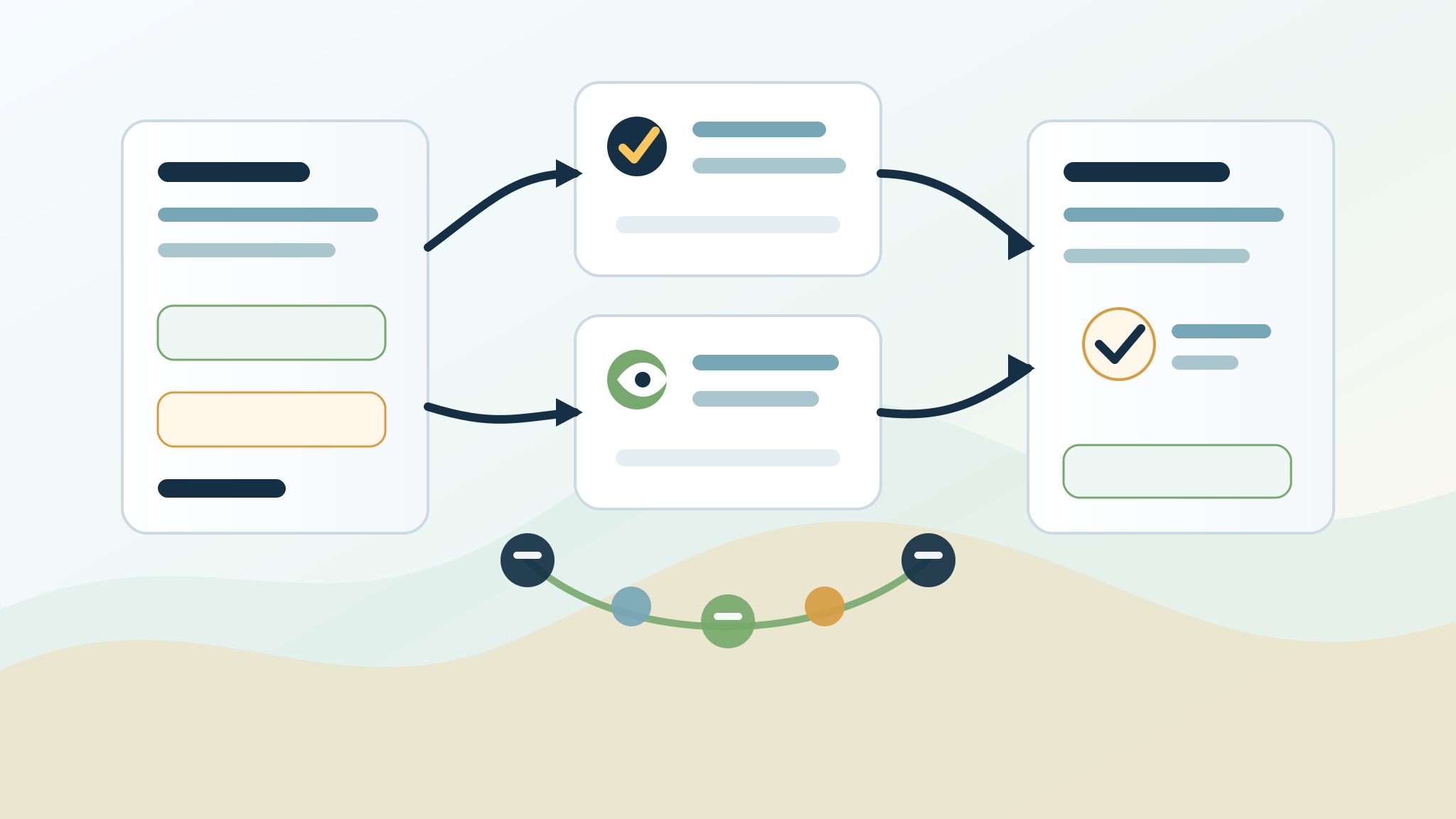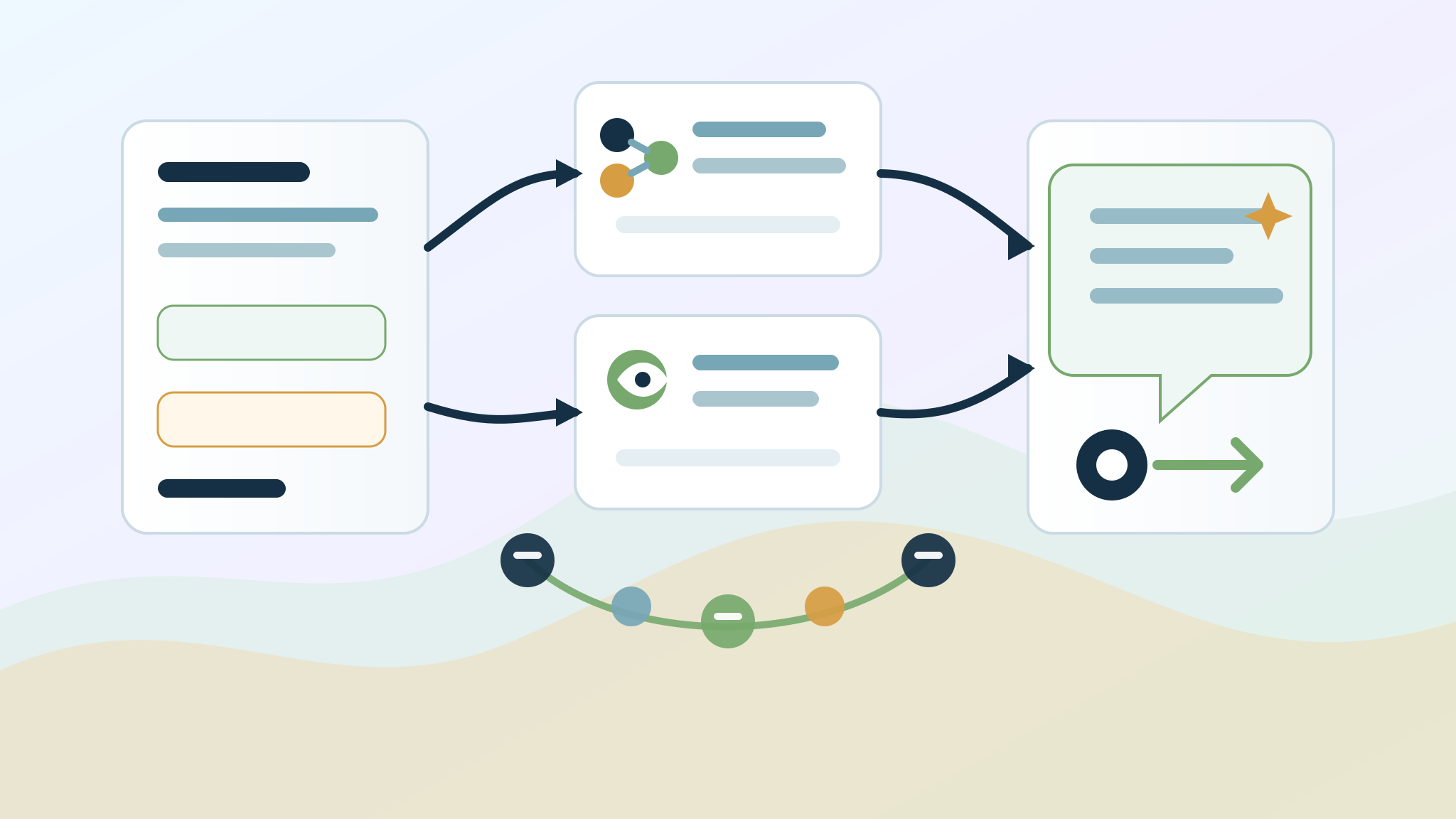
Answer Engine Optimisation (AEO) for a UK SME starts with clear, answer-first pages that match real questions — not with inventing statistics or chasing every AI chatbot. Fix titles, lead answers, FAQ blocks and claim safety before you worry about being cited.
Google treats work aimed at generative Search features as SEO and describes AEO and GEO as third-party terms. Inclusion in any answer surface remains eligibility, not a guarantee.
Quick Answer
Before buying “AI visibility” work, make five customer questions answerable in the first screen of the relevant page, keep claims source-safe, align FAQs with real enquiries, and confirm crawlable HTML with sensible titles and canonicals. Halo AI Services can rebuild when navigation or the CMS blocks that clarity; otherwise leave a working site alone and tighten the answers.
What AEO actually means here
Search and answer engines increasingly summarise. If a page buries the answer under brand fluff, the summary may invent detail or skip the business. AEO, used carefully, is the craft of making the first useful answer obvious to both people and machines, with sources and limits labelled.
It is not a separate ranking product Halo can promise. Independent systems decide what they retrieve, summarise or cite. The useful work is clarity, evidence and routes — the same standard Halo already applies to redesign decisions, newsletter archives and e-commerce launch checks.
Fix these before “AI visibility” projects
- One question per page lead — state the answer in the first short paragraph so a buyer and a summariser see the same fact first.
- FAQ that matches real enquiries — pull questions from sales calls and support, not from keyword lists alone.
- Claim safety — no invented case-study numbers, rankings, partner logos or “average ROI” figures without a source the buyer can check.
- Internal routes — link to the quote, product, booking or project-brief path the answer implies.
- Technical hygiene — crawlable HTML, sensible titles, working canonicals and structured data that matches visible content only.
These five items usually unlock more value than a directory submission list or a dashboard that scores “AI mentions” without a published method.
When Halo should rebuild vs leave it alone
Leave the site alone when pages already answer clearly, conversion paths work, and the CMS can host FAQ and article templates without fighting you. Focus on copy, evidence and internal links.
Rebuild or redesign when navigation hides answers, content contradicts itself across pages, soft-404 behaviour confuses crawlers, or the CMS cannot support structured FAQ and guide templates without fragile plugins. Rebuild is a delivery decision about clarity and operability — not a claim that a new theme will produce AI citations.
If you are unsure, start with the free opportunity audit or a scoped project brief rather than a full rebuild quote. Halo’s bias is the smallest change that makes the next buyer step obvious.
A 30-minute self-audit
Use this when budget is tight and you need a first cut before any agency conversation:
- Pick five customer questions from sales calls or support tickets.
- Search your own site for each. If the answer is not in the first screen, rewrite the lead.
- Check whether any claim would survive a sceptical buyer asking “says who?”
- Confirm the page links to one clear next step (brief, audit, booking or contact).
- Note broken titles, duplicate H1s, or FAQs that do not match the page topic.
Record the date, the five questions and what you changed. That baseline matters more than a vanity score from an unverified tool.
SEO still matters alongside AEO
Classic SEO foundations still apply: useful content, technical access, internal links and honest structured data. Google’s AI-features guidance states that eligibility does not guarantee crawling, indexing or serving.
Treat AEO as an emphasis on extractable answers and safer citation — overlapping with SEO, not replacing it. A thin blog written only for chatbot keywords usually fails both buyers and machines.
Claim safety and the proof ledger habit
Unsupported numbers are a common failure mode in AI-visibility pitches. Prefer:
- Process evidence (what was checked, on which date, with which source).
- Public references that a buyer can open.
- Explicit limits (“this does not prove ranking or revenue uplift”).
Halo’s practical guide on a proof ledger for service pages describes how to separate verified outcomes, process evidence and unsupported claims. Use that habit before you publish comparison tables or “typical results” language.
Schema: useful only when accurate
Structured data can help eligible systems understand a page when it matches what humans see. Broken FAQ schema, inflated Review markup or Organisation fields that disagree with the footer create noise.
Google requires no special AI schema for generative features. Add Article, FAQPage and BreadcrumbList only where the CMS can keep them accurate. Broken FAQ schema is worse than none.
How this guide differs from Halo’s existing AEO overview
Halo already publishes a broader overview of answer engine optimization for UK SMEs and a companion answer-engine visibility audit. This guide is the sequencing document: what to fix first, when not to rebuild, and how to run a short self-audit before buying mentions-focused work.
Red flags in AEO sales pitches
Walk away or pause when a pitch includes:
- Guaranteed ChatGPT, Perplexity or Google AI mentions.
- Secret prompt tricks sold as a managed service.
- Mass spun blogs with no named editorial owner.
- “We submitted you to hundreds of AI directories” as the whole product.
- Pressure to replace the whole site before a diagnosis of answer clarity.
Ask which surfaces are in scope, what will change on the site in thirty days, and how progress will be measured without invented metrics.
FAQ
Is AEO separate from SEO?
Overlapping. Classic SEO still matters for technical access and useful content. AEO emphasises extractable answers and safer citation. For Google’s generative Search features, the underlying work remains SEO.
Should every page have schema?
Only where the CMS can keep it accurate and the markup matches visible content. Broken FAQ schema is worse than none.
Does fixing answers guarantee an AI citation?
No. Clear answers, evidence, technical access and aligned schema can improve eligibility and usefulness. Independent systems decide what they retrieve, summarise or cite.
When should we rebuild the website for AEO?
When navigation or the CMS prevents clear answers, FAQs and honest structured data — not merely because a sales deck says a redesign will unlock AI visibility.
How should a UK SME start with Halo?
Start with five real buyer questions, a short self-audit, then a free opportunity audit or project brief scoped to the first useful fix. Prefer concrete page and route work over open-ended “AI retainers”.
Next Step
Choose five questions your sales calls already answer. Put each answer in the first screen of the matching page, add a honest FAQ where needed, remove unsupported claims, and link to one clear next step. If the site structure blocks that work, brief a controlled rebuild; if it does not, keep the site and tighten the answers.