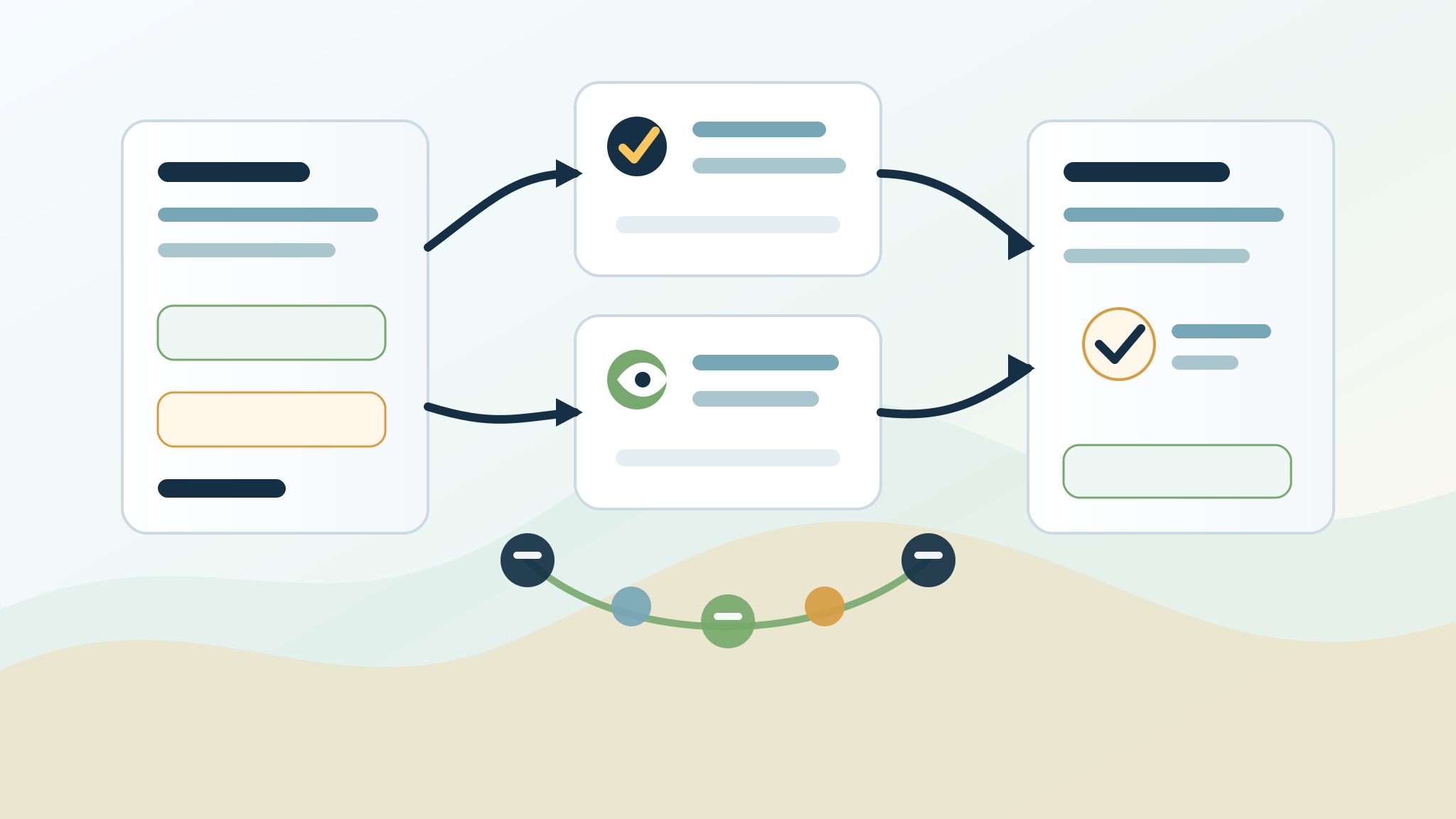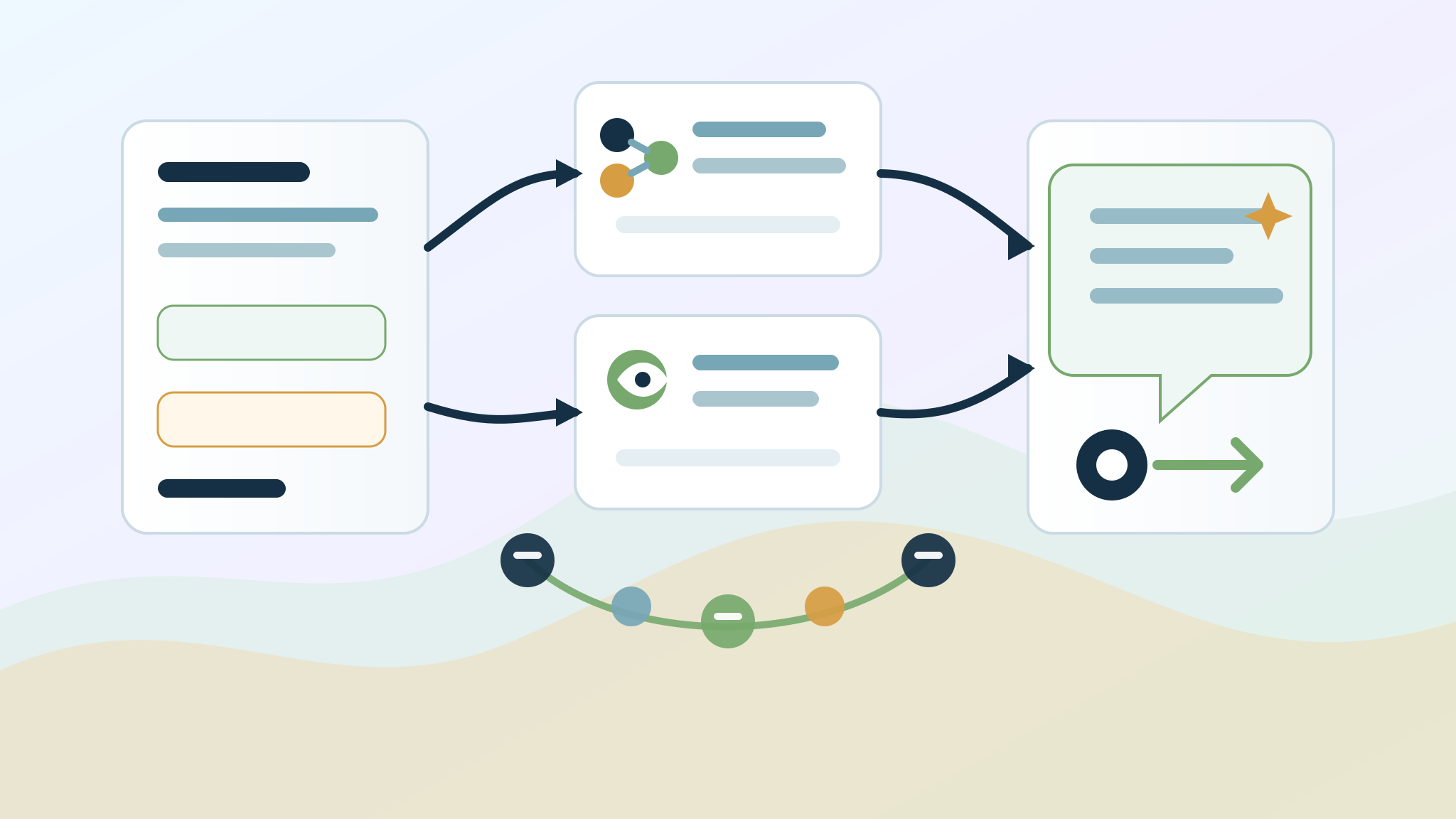
Answer Engine Optimisation (AEO), used carefully, means writing pages that answer real buyer questions clearly enough to summarise — not buying a promise that ChatGPT, Google AI Overviews or any other surface will cite you. For UK SMEs, the useful upstream artefact is a content brief built from question clusters, with claim limits written in before anyone drafts.
Halo AI Services treats AEO as an emphasis overlapping SEO and GEO, not a separate guaranteed product. Google describes work aimed at generative Search features as SEO and treats AEO/GEO as third-party labels. Inclusion in any answer surface remains eligibility, not a promise.
Quick Answer
To brief AEO-ready pages for a UK SME: collect five to ten real questions from sales calls, support tickets and search query exports; cluster them by intent; write a one-sentence answer for the primary question; list only claims you can evidence; add FAQ only where answers already exist in the brief; and name the next step (quote, booking, or project brief). Do not invent conversion rates, “#1 in the UK” lines or case-study numbers you cannot open.
Why briefs fail before the draft starts
Most thin AI blog output fails because the brief was already dishonest:
- Topic without a question — “benefits of AI for SMEs” with no buyer situation.
- Metrics with no source — percentages copied from unnamed LinkedIn posts.
- Service area fog — national language when the firm only covers three counties.
- CTA sprawl — five competing next steps so answer engines cannot see the primary action.
AEO does not fix a vague offer. It exposes it.
A practical AEO brief template
Use this as a working document, not a score:
- Primary question — the sentence a buyer would actually type or ask on a call.
- Audience + geography — who, where, and who you do not serve.
- One-sentence answer — extractable in the first screen.
- Evidence list — credentials, process steps, public pages, photos with limits — each labelled.
- Out-of-scope claims — what writers must not invent (prices you have not set, timelines you have not measured, rankings you do not hold).
- FAQ cluster — three to six related questions with short answers already drafted in the brief.
- Internal links — service page, proof page, contact/quote path.
- Schema intent — Article + FAQ only if the on-page content will match.
- Review gate — named human checks claims before publish.
Building question clusters without fake keyword theatre
Pull questions from:
- Recurring sales objections
- Support macros and onboarding emails
- Search Console queries (where you have access) — treat them as clues, not quotas
- Competitor FAQs you can answer more honestly — not copy
Cluster by intent, for example:
- Eligibility / fit — Do you cover my town? Do you work with my size of firm?
- Process — What happens in week one? What do I need to prepare?
- Risk — What data do you need? What do you not automate?
- Commercial — How do you quote? What is fixed vs exploratory?
One cluster becomes one page or one tightly linked pair — not a 40-heading mega-guide that answers nothing.
Claim safety rules Halo will not break in a brief
- No invented statistics
- No “guaranteed AI visibility” or ranking promises
- No fabricated testimonials
- No copying another firm’s case numbers
- Geographic claims must match delivery reality
If a claim cannot be evidenced, the brief marks it watchlist / do not state rather than leaving a blank for a model to fill later.
How AEO briefs relate to GEO and classic SEO
- SEO — crawlable structure, titles, internal links, useful depth.
- AEO — answer-first clarity and FAQ that match real questions.
- GEO — same clarity with local/service-area precision and citations you can open.
They overlap. Buying three dashboards does not replace one honest brief.
Implementation sequence for a small team
- Pick one money page (service or location) that already gets enquiries.
- Mine ten real questions in one working session.
- Fill the brief template above in under an hour.
- Draft to the brief — not beyond it.
- Human claim review.
- Publish and note which questions still lack a page.
Repeat weekly. AEO compounds from consistent answer-first pages, not from a single “AI SEO” purchase.
What good looks like on the published page
- Primary question answered above the fold
- Geography and service limits stated early
- FAQ matching the brief cluster
- Proof with limits (photos, process, credentials) — not invented scores
- One clear next step
What to avoid
- Keyword stuffing synonym lists with no answers
- “Studies show” without a link you own or can open
- National claims for a local operator
- Publishing before the claim review gate
AEO: What should a UK SME put in an AEO content brief?
Primary question, one-sentence answer, geography, evidence list, banned claims, FAQ cluster and a single next step. Skip invented metrics.
GEO note
Local service firms should keep town and travel-radius language consistent with the NAP and service pages. National-sounding briefs for a three-town operator create answer engines that over-claim on your behalf.
FAQ
Does an AEO brief guarantee citations in ChatGPT or AI Overviews?
No. Briefs improve clarity and claim safety. Independent systems decide what they retrieve or cite.
How long should the brief be?
Long enough to constrain the draft — often one to two pages. If the brief is longer than the article, you are over-planning.
Can AI write the brief?
It can help cluster questions you already collected. It must not invent the evidence list or metrics.
Where does Halo start with clients?
Usually with one high-intent service page and a question cluster from real enquiries — see related guides on answer-engine optimisation, local GEO citations and proof-safe service pages.
Is AEO different from SEO?
AEO emphasises answer-first clarity and FAQ alignment. Classic SEO still matters for crawlable structure and links. Halo treats them as overlapping craft, not competing products with guaranteed rankings.