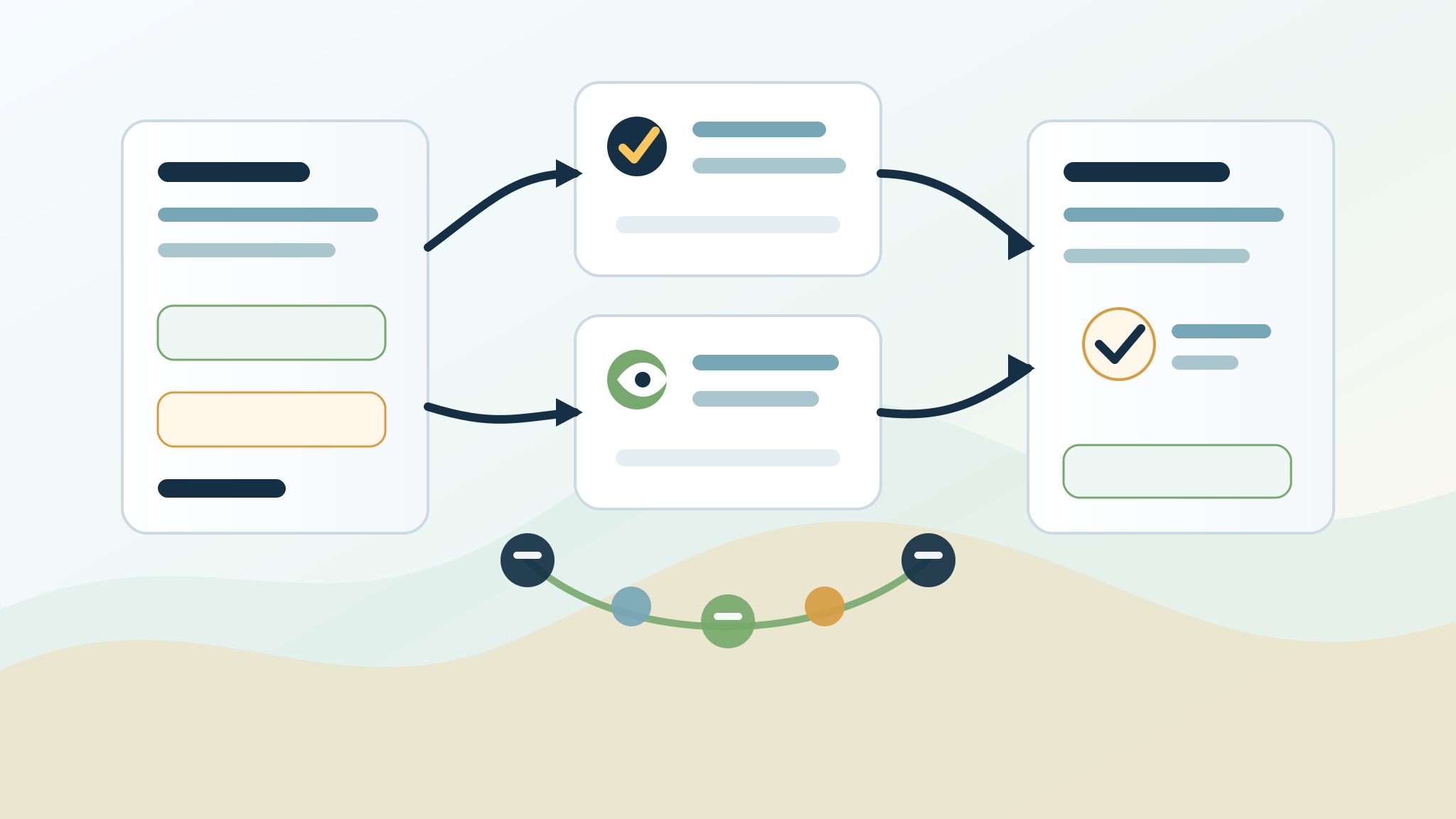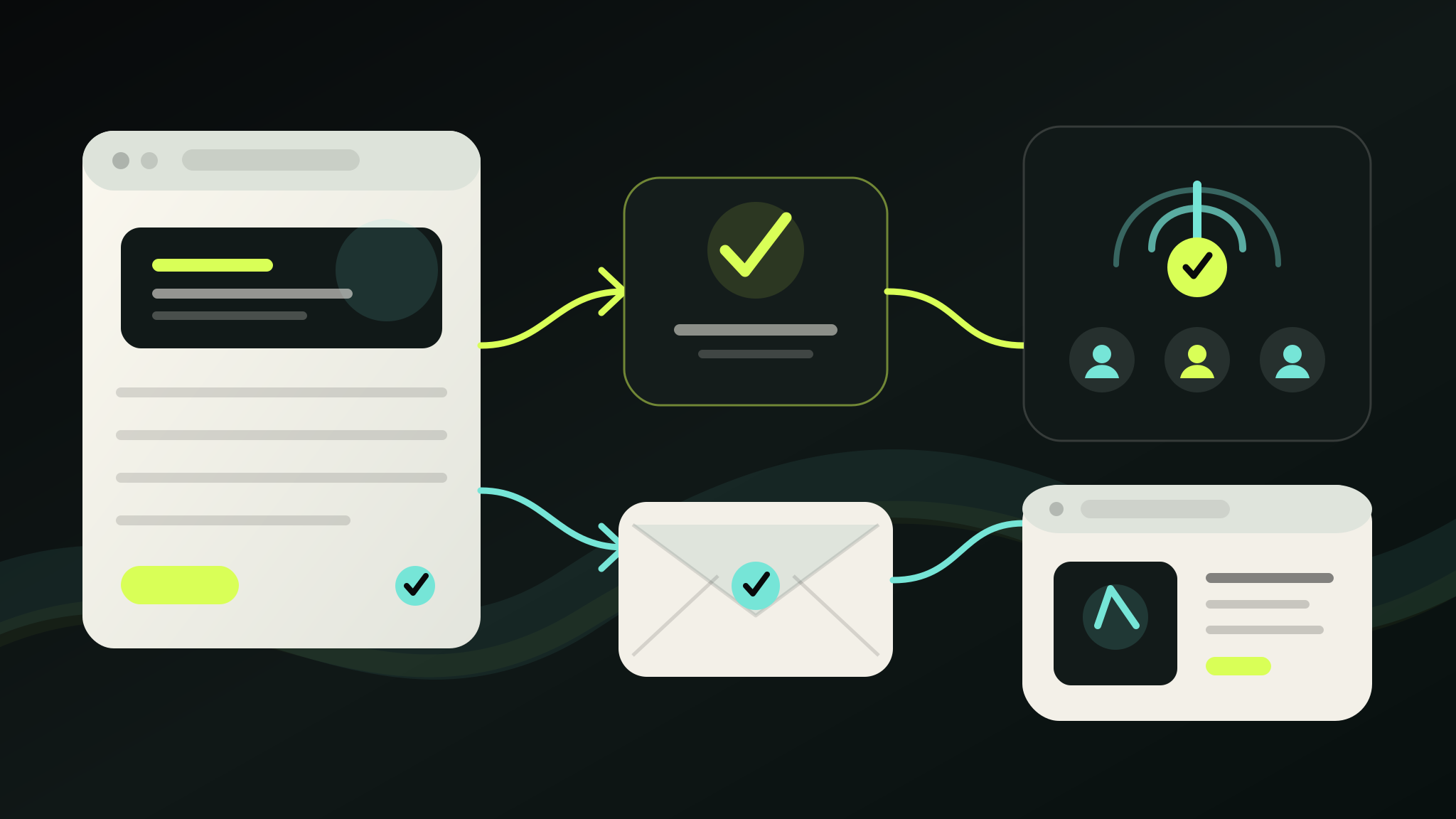
Learning how to start a business newsletter in the UK begins with a publishing system, not a subscriber target. A durable newsletter needs a clear reader promise, repeatable issue structure, public archive, controlled sign-up and delivery route, and a record of what was actually published and sent.
Build one useful issue and the route around it before promising weekly output or growth. That first issue can prove the editorial and technical workflow. It cannot prove inbox placement, subscriber demand, opens, clicks, search visibility or future consistency.
Quick Answer
Define one reader, one recurring problem and one issue format. Publish the issue to an accessible archive page, connect a permission-aware sign-up route, send through a configured provider, and retain receipts for the exact issue and test addresses checked. Review links, mobile layout, sender identity, unsubscribe handling and the archive before inviting a wider audience.
Halo’s newsletter and publishing service can build the issue template, archive and delivery workflow. Where discoverability is part of the brief, search visibility work should be treated as a separate, measurable route rather than an automatic benefit of sending email.
Decision Framework: Choose The Newsletter Job
A newsletter works better when it has one primary job:
- Editorial briefing. Curate useful developments for a defined audience.
- Expert guidance. Answer a recurring customer problem with practical depth.
- Company update. Explain product, project or operational changes to people who asked to hear from the business.
- Content distribution. Package selected website material into a convenient issue while giving readers a reason to visit the source.
Choose one as the lead promise. A mixed issue can still include links, news and offers, but the reader should understand why the next edition will be worth opening. If the only plan is “send our latest posts”, strengthen the editorial angle before investing in automation.
Build One Repeatable Issue
Create a compact issue template with:
- A specific subject and opening promise.
- One lead item with enough context to stand alone.
- A small number of supporting items.
- Clear source links and checked publication dates.
- A sender identity and reply route.
- A useful next action that matches the issue.
- An unsubscribe route and required footer information.
Keep the template simple enough to review on a phone. Establish who researches, drafts, checks sources, approves claims, loads the issue, sends the test and authorises the live send. AI can help organise notes or draft from approved sources, but it should not invent facts, testimonials or citations.
The website content-engine guide is useful when issues and website articles share a source workflow. The issue should still be edited for email rather than pasted from a page.
Treat The Archive As A Product Surface
A public archive gives each issue a stable home that can be checked without inbox access. Include the issue title, publication date, readable body, descriptive links and a route to subscribe. Keep corrected or withdrawn material explicit rather than silently rewriting a historical issue.
An archive URL being live proves that a page was available when checked. It does not prove that search engines indexed it, ranked it or sent visits. Structured pages and internal links can make discovery possible, but search outcomes need separate evidence.
Halo’s work includes Moghrey Mie as an operated newsletter issue and archive surface. That demonstrates that the issue/archive route was run. It is not evidence of subscriber numbers, inbox placement, open or click rates, audience growth, or search performance. Halo’s proof standard keeps those claims outside the receipt unless separately verified.
Set Up Delivery Without Overclaiming It
Configure a recognisable sender, reply handling, authenticated domain records where the provider requires them, a suppression process and a test group. Check the exact message in representative inboxes and inspect every link before a broader send. Record provider acceptance, send identifier, time, issue URL and test result without storing unnecessary recipient data.
Provider acceptance means the provider accepted that message for processing. It is not universal delivery proof and does not establish inbox placement for every recipient. Bounces, blocks, spam filtering and client rendering can vary after acceptance.
Permission And PECR Context
Do not buy or scrape a list and assume that an unsubscribe link makes the campaign appropriate. Record how each audience route was obtained, what people were told, the communication type and how objections or withdrawals are handled. The ICO’s official guidance on PECR electronic-mail marketing rules explains the relevant UK framework and distinctions between consent, existing customer routes and corporate subscribers.
This guide is operational context, not legal advice. The correct basis depends on the recipients, message and facts. Ask a qualified adviser or the relevant regulator when the position is uncertain, and do not make the publishing system decide a legal question it cannot know.
Evidence To Keep Per Issue
Maintain a small proof ledger containing the approved source draft, issue version, public archive URL, checked date, test-send receipt, live provider receipt if sent, and known corrections. If reporting opens, clicks or subscriptions, record the platform, date range, bot-filtering assumptions and exclusions.
Do not turn one screenshot into a broad performance claim. The proof-ledger guide offers a practical structure for separating process evidence from audience outcomes.
What To Send Halo
For a useful first review, send:
- The intended reader and one-sentence editorial promise.
- A rough first issue or three candidate items.
- The desired publishing frequency and realistic owner capacity.
- The current website, archive or email provider, if any.
- How the intended recipients joined the audience.
- The approval owner and claims that need source checking.
- The evidence you need from the first issue.
Use the newsletter publishing audit for an existing route, or send a newsletter or content-system brief for a new one. Do not send subscriber exports, passwords or provider keys in the initial request.
Next Step
Draft the title, opening paragraph and three-item outline for issue one. Name the person who will approve it, the archive location and the small set of test inboxes. Halo can then recommend the smallest useful package: issue design, archive template, publishing workflow, delivery setup or a measured combination of them.
FAQ
What do I need before starting a UK business newsletter?
You need a defined reader, useful recurring promise, first issue outline, approval owner, archive route and a considered audience-permission process. A large list or complicated automation is not required to prove the first publishing workflow.
How often should a business newsletter be sent?
Choose a frequency the business can research, review and sustain. A reliable monthly issue is more credible than a weekly promise that produces thin or unverified content. Test the full workflow before announcing a fixed cadence.
Does a provider send receipt prove delivery?
No. It proves only the provider state recorded for that message. Delivery, inbox placement and rendering can differ by recipient system, so broader claims need additional evidence and clearly defined coverage.
Can I email previous customers about a newsletter?
That depends on the recipient type, how details were collected, what was explained, the message and the applicable PECR rules. Review the ICO guidance and obtain qualified advice for uncertain cases rather than assuming all previous customers can be added.
Should every newsletter issue have a public archive page?
A stable archive is usually useful for sharing, correction and independent checking. It can also make discovery possible. It does not guarantee indexing, rankings, visits or subscribers, and sensitive or private communications may need a different approach.