A small business website redesign should solve a defined commercial or operational problem. A new visual style alone is not a reason to replace a working site, while failures in structure, ownership or release safety can justify a controlled rebuild.
The useful decision is not “Does this look old?” It is “Which smallest intervention can make the buyer journey, content ownership and release process dependable?”
Quick Answer
Leave the website alone when it is clear, maintainable and doing the job the business can evidence. Repair bounded copy, navigation, speed, accessibility or conversion defects. Redesign when the hierarchy and interface no longer match how buyers choose. Rebuild when the platform, templates, integrations or deployment route prevent safe improvement.
Before choosing, preserve a baseline and name the acceptance checks. A redesign can change search behaviour temporarily, and no supplier can honestly guarantee rankings will be preserved. Accessibility testing can identify and fix barriers, but it is not a blanket legal-compliance guarantee.
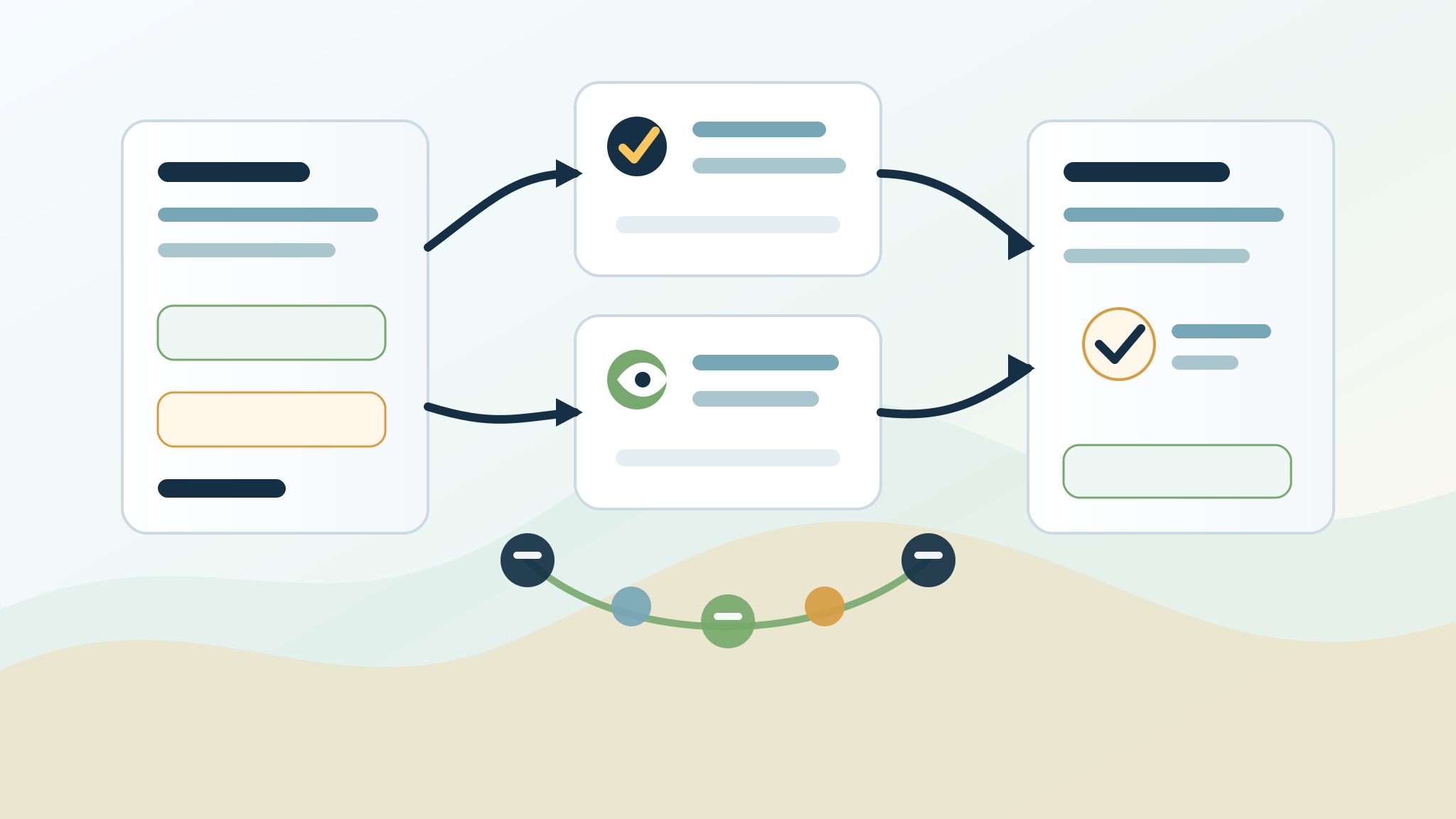
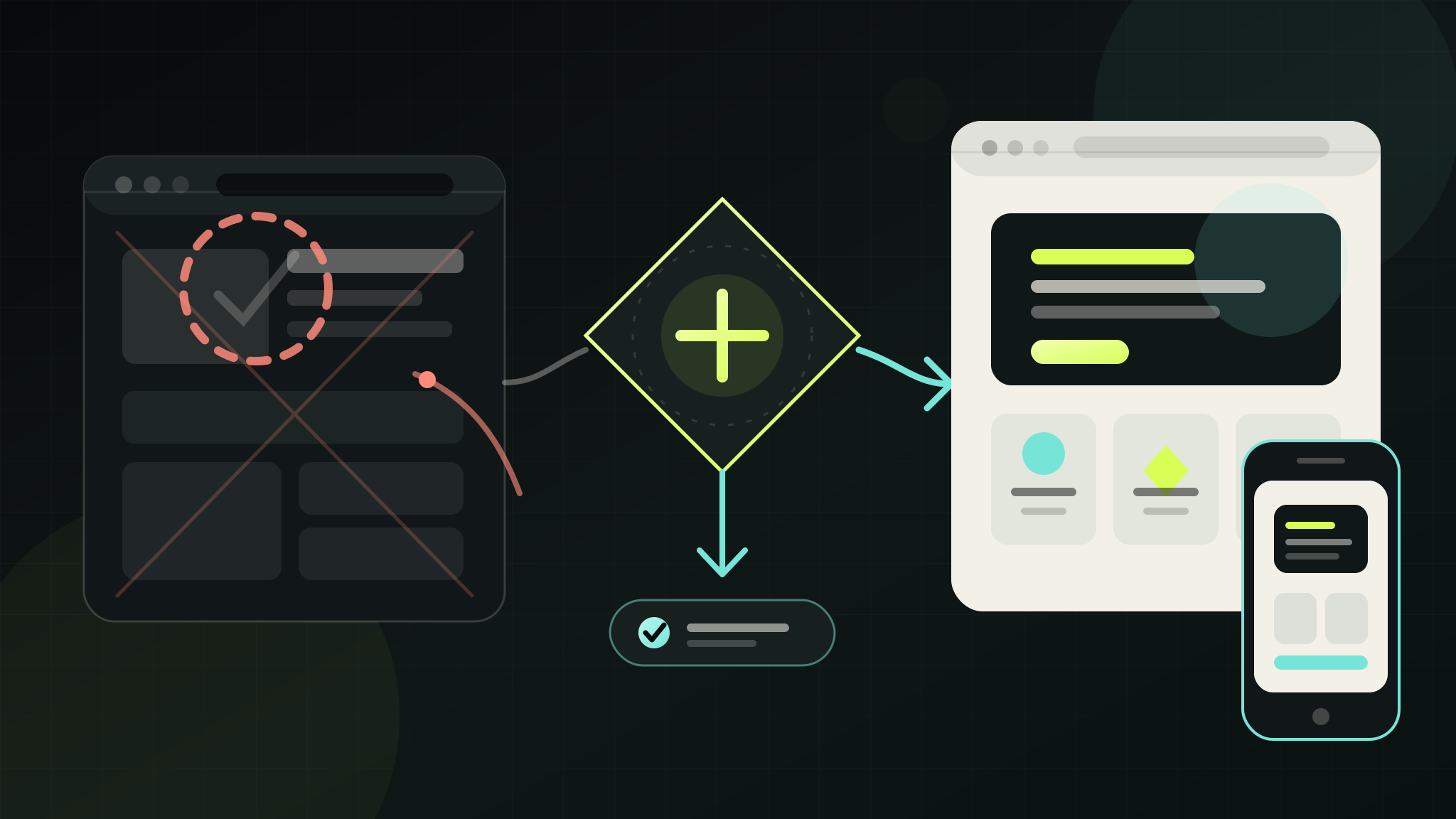
The Fix, Redesign, Rebuild Or Leave-It-Alone Framework
Use four decisions in order.
Leave It Alone
Keep the current site when buyers understand the offer, reach the right next step, use it on relevant devices and the owner can release it safely. Review on a real trigger: a changed offer, repeated confusion, platform risk or measurable route decline.
Make A Focused Repair
Choose repair when the structure is sound and the defect has a clear boundary: an unclear service opening, weak call to action, inaccessible form label, oversized image, broken redirect or mobile layout fault.
Treat each repair as a testable release. The AI lead-capture guide covers enquiry-path work in more depth; it should not be used as an excuse to rebuild unrelated pages.
Redesign The Journey
Choose redesign when hierarchy and interface make the buyer work too hard but the platform remains viable. Reorganise services, clarify page roles, reduce competing actions and create consistent components.
A redesign needs content and route decisions before polished screens. Otherwise the project merely gives the same confusion a newer appearance.
Rebuild The System
Choose rebuild when fragile templates, unclear ownership, repeated inaccessible components, unsafe deployments, obsolete dependencies or untestable integrations block meaningful changes. Preserve useful content, known URLs and operational knowledge.
Capture The Baseline Before Changing Anything
A credible baseline records what exists, not what the team remembers. Capture:
- The indexable URLs, canonical tags, redirects and sitemap state.
- The main buyer journeys and their current completion points.
- Representative mobile and desktop screenshots.
- Page weight, key asset sizes and repeatable performance checks.
- Keyboard, focus, zoom, form-error and screen-reader observations.
- Current analytics definitions, while separating measurement gaps from zero activity.
- Forms, notifications, integrations and the people who respond.
- Claims, proof sources and their checked dates.
Do not infer traffic, ranking or enquiry uplift from a cleaner codebase; those outcomes require comparable observation.
Protect Search Routes During A Rebuild
When URLs change, create an old-to-new route map before release. Google’s official site-move guidance recommends permanent server-side redirects, updated internal links and sitemaps, and monitoring after the move. Apply the guidance to the exact migration; do not assume that one redirect test proves every route.
Avoid changing platform, domain, URL structure and copy hierarchy simultaneously. A staged release makes defects easier to attribute. Check redirects, canonicals, robots directives, structured data and error responses on the live host.
Temporary search fluctuations remain possible even with careful migration. The honest commitment is to preserve and verify the route map, not to promise an unchanged position.
Set Accessibility Acceptance, Not A Vague Promise
Use WCAG 2.2 as a recognised technical reference and define which pages, components, criteria, browsers and assistive checks are in scope. Include keyboard operation, visible focus, text resizing, touch-target behaviour, headings, names and labels, contrast, error recovery and reduced-motion behaviour where relevant.
Automated tools are incomplete. Add manual checks on representative journeys, then record what passed, remains or was not tested.
Define Release Acceptance Before Design Approval
Visual approval is only one gate. A small-business website release should have explicit acceptance for:
- Content: the named owner approves wording and evidence.
- Routes: pages resolve, retired routes redirect and missing pages return a real error.
- Journeys: navigation, forms and fallbacks work on representative devices.
- Metadata: canonicals, social previews and structured data match visible content.
- Operations: deployment, recovery, notification and ownership routes are documented.
- Observation: checks and their observation period are named.
The Halo proof approach and proof-ledger guide show how to keep checks separate from unsupported business outcomes.
What Halo Evidence Can And Cannot Show
Halo’s self-owned website rebuild case study can support measured source, page-weight, routing and release changes on this website. It does not prove traffic, search ranking, enquiries or revenue increased. Those require separate live evidence.
The related websites service covers strategy, copy, design and development. Search work has its own evidence boundary; a redesign should not quietly absorb a ranking guarantee.
What To Send Halo
Send the public website, most important buyer journey, change driving the review and any platform constraint. Include pages that must survive, the claims owner and the result to observe. Do not send passwords, private analytics exports or customer records.
For an existing site, use the website audit route. For a new or replacement build, use the website project brief.
FAQ
How do I know whether my small business website needs a redesign?
Start with the buyer journey and operating constraints. If the site is clear, usable and maintainable, leave it alone. If one defect is bounded, repair it. Redesign when hierarchy and interface are the problem; rebuild when the underlying system prevents safe improvement.
Will a website redesign preserve my Google rankings?
No supplier can guarantee that. Preserve important content and routes, use permanent redirects where URLs change, update internal links and sitemaps, and monitor the live migration. Search fluctuations can still occur.
Is a rebuild always more expensive than repairing the site?
Not necessarily, and a responsible decision cannot be made from page count alone. Scope depends on the existing platform, reusable content, integrations, migration risk, acceptance checks and how safely the current system can be changed.
Does accessibility testing prove the website is legally compliant?
No. Testing can provide evidence against defined WCAG criteria and journeys. Legal duties depend on context and appropriate professional advice; avoid a blanket compliance claim.
What should be measured after launch?
Check the agreed routes, form and notification behaviour, errors, performance and accessibility acceptance first. Traffic, ranking, enquiry and revenue changes need comparable data and an observation period before any causal claim.
Next Step
Choose one route that matters and write down its current failure, the smallest credible intervention and the live acceptance check. Halo can then recommend repair, redesign, rebuild or no change without turning a website review into an automatic sales pitch.